
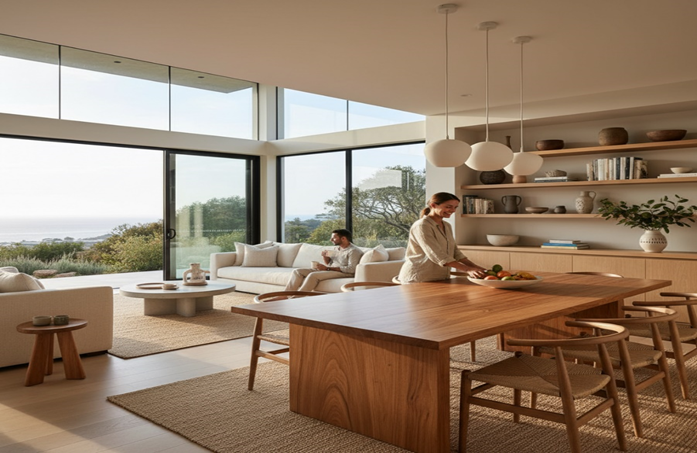

There is a comforting honesty about timber. Unlike fleeting trends, wood offers a sense of permanence and warmth that grounds a space. It’s the material choice of those who value quality, longevity, and a connection to the natural environment. But choosing the right wood for your home is more than just selecting a sturdy table; it’s about defining your aesthetic narrative.
Every interior style, from the breezy coastal retreat to the sophisticated urban apartment, benefits immensely from the inclusion of expertly crafted timber furniture solutions. The grain, the colour, and the finish of the timber you choose act as silent collaborators, either enhancing or clashing with your existing décor. We all know that feeling of walking into a room that just works – often, the secret lies in the thoughtful integration of natural materials.
Whether you are fitting out a new build or looking to refresh a tired lounge room, understanding how different timber varieties interact with light and texture is crucial. Let’s explore how you can optimise your selections to ensure your Timber Furniture doesn’t just fill a space, but elevates it.
The enduring appeal of solid timber
In a world dominated by mass-produced items, solid timber stands apart. It is a material that tells a story, marked by the environmental conditions it grew in and the care taken by the craftsperson who shaped it. This inherent character is what gives quality timber furniture its enduring appeal.
Why timber is the backbone of quality interiors
The decision to invest in solid wood furniture is often driven by practical reasons as much as aesthetic ones. Unlike cheaper, composite materials, genuine timber is built to last, often becoming heirloom pieces passed down through generations. This is particularly true when dealing with dense hardwoods, which resist warping and damage far better than softwoods.
Consider the typical stresses a home endures – humidity changes, the occasional bump from kids, or the weight of a busy life. Solid timber takes this in its stride. Furthermore, the ability to repair, sand, and re-finish a piece of quality wood means its lifecycle is virtually limitless. It is a sustainable choice, providing value that minimises the need for constant replacement.
Matching timber to your aesthetic: Style breakdown
The key to harmonising your interior design is ensuring the tone and texture of your wood pieces align with your overall stylistic goals. A chunky, rustic piece of Jarrah, for example, would look jarring in a delicate, minimalist setting, just as a finely polished mahogany piece might feel out of place in a rugged industrial space.
Coastal chic and light timbers
The coastal aesthetic is all about light, airiness, and a relaxed, sun-drenched atmosphere. Think of whitewashed walls, natural fibres, and the calming influence of the ocean. The timber required here must reflect this lightness.
For this style, lighter woods are your best ally. Varieties such as pale Oak, Ash, or even light Tasmanian Blackwood, often finished with a clear lacquer or a subtle whitewash, work perfectly. These woods have minimal red or yellow undertones, ensuring they bounce light around the room rather than absorbing it. When selecting timber furniture for a beachside feel, look for pieces with simple lines and a matte finish that emphasises the natural texture of the grain.
Mid-century modern and warm hues
Mid-century modern (MCM) design is characterised by clean lines, organic curves, and a deep appreciation for natural materials. This style demands timber with a rich, inviting colour that speaks to the era’s sophistication.
Teak is the classic choice here, famous for its golden-brown hue and durable nature. However, darker woods like Walnut or even a well-oiled Jarrah can achieve that warm, earthy MCM look. These woods often feature in sleek timber dining tables with tapered legs or low-slung credenzas. The furniture itself often serves as the focal point, so choosing a timber with a distinctive grain pattern is vital to achieving an authentic mid-century feel.
Industrial edge and rugged finishes
The industrial style embraces raw materials, exposed structure, and a utilitarian beauty. This is where recycled or reclaimed timber truly shines. The wood should look honest, bearing the marks of its previous life.
Darker, denser woods like Marri, Karri, or recycled hardwoods are ideal. These timbers often feature knots, visible imperfections, and a deeper, more imposing colour. Pairing these robust wooden surfaces with black metal frames – perhaps for a set of timber chairs surrounding a large communal table – creates the necessary contrast. The finish should be rugged, perhaps a wax or oil that protects the wood without making it look too polished or precious. It’s about celebrating the labour and the material itself.
Classic elegance and refined grains
For the classic, traditional interior, the focus is on formality, symmetry, and highly detailed craftsmanship. The timber used in these settings should possess a refined grain and a deep, lustrous finish.
Mahogany and high-quality Jarrah, often stained to a deep red or brown, are staples of this style. These woods are typically polished to a high sheen, reflecting light beautifully and enhancing the complexity of the grain. Look for items with intricate detailing, such as carved mouldings or turned legs. When selecting timber furniture for a traditional space, remember that scale and proportion are key; pieces should feel substantial and luxurious.
Beyond the living room: Specialist timber pieces
While we often focus on living and dining areas, timber’s versatility extends into every corner of the house, even damp environments where many assume wood cannot survive. Specialist pieces require specialist timber selection.
Integrating timber bathroom vanity units
The bathroom is perhaps the ultimate test of timber quality. High humidity and water exposure demand specific, durable hardwoods. However, the warmth and natural texture that wood brings to a tiled bathroom space is unparalleled.
When considering timber bathroom vanity units, moisture resistance is paramount. Woods like Teak or sealed hardwoods, which are naturally oily or have been treated with high-quality, marine-grade protective finishes, are the only sensible choices. These timbers can withstand the steamy environment of a family bathroom without swelling or degrading. The inclusion of a custom-built vanity transforms a purely functional space into a sanctuary.
Selecting the perfect hardwood vanity piece
Selecting the perfect Solid timber bathroom vanity piece requires attention not only to the wood type but also to the construction method. Look for solid construction, dovetail joints, and high-quality hardware that won’t rust. The style of the vanity should mirror the overall home aesthetic:
- Minimalist: Floating vanities with hidden handles and a simple, unadorned timber slab.
- Farmhouse/Rustic: Vanities built to look like repurposed chests or cabinets, often featuring exposed grain.
- Contemporary: Sleek, dark timber finishes paired with stone or composite benchtops.
This careful selection ensures that your timber bathroom vanity remains a beautiful and functional centrepiece for years to come.
Practical considerations for longevity and quality
Making a significant investment in quality timber means thinking about more than just the initial look. You need to consider the source, the construction, and the ongoing maintenance requirements.
Sourcing reliable timber pieces for your home
It’s essential to purchase from reputable suppliers who understand local conditions and standards. Whether you are looking for custom pieces or ready-made designs, asking questions about the wood’s origin, kiln drying process, and finishing materials is crucial. If you are looking for timber furniture Perth based specialists will often recommend local hardwoods like Jarrah, Marri, and Karri, which are known for their density and resistance to the climate.
Always inspect the joints and construction methods. A quality piece of timber furniture will feature robust joinery (like mortise and tenon or dovetail joints), not just screws and glue. This attention to detail is what separates genuine craftsmanship from cheaper imports.
Maintenance and care tips for wood furniture
Caring for solid timber is surprisingly straightforward, but consistency is key. Dust regularly with a soft cloth. For oiled or waxed finishes, periodic re-application of the protective layer is necessary to maintain the wood’s lustre and prevent drying out. For lacquered or varnished surfaces, a simple wipe down is usually sufficient.
A few simple rules for all timber furniture:
- Avoid placing pieces in direct, harsh sunlight, which can fade and dry out the wood over time.
- Use coasters and placemats to protect surfaces from moisture rings and heat damage.
- Address spills immediately, particularly on untreated or oiled surfaces.
- Maintain a stable humidity level where possible, especially for fine pieces, to minimise the natural expansion and contraction of the wood.
By following these simple steps, you ensure the rich colour and integrity of your timber furniture lasts for the longest possible time, maintaining the value and beauty of your investment.
The final touch: Creating a unified look
Ultimately, selecting the right timber furniture is about creating harmony. While you don’t need every piece of wood in your home to be identical, they should share a common undertone – either warm (reds, golds) or cool (greys, pale browns). Mixing woods successfully relies on finding this common ground, ensuring that even if you have a Marri buffet and an Oak coffee table, they complement each other without competing for attention.
Choosing timber is a commitment to quality and style. By understanding the inherent characteristics of different wood types, you can confidently select pieces that not only fit your functional needs but also perfectly articulate your unique interior vision, creating a home that feels both authentic and enduring.
