
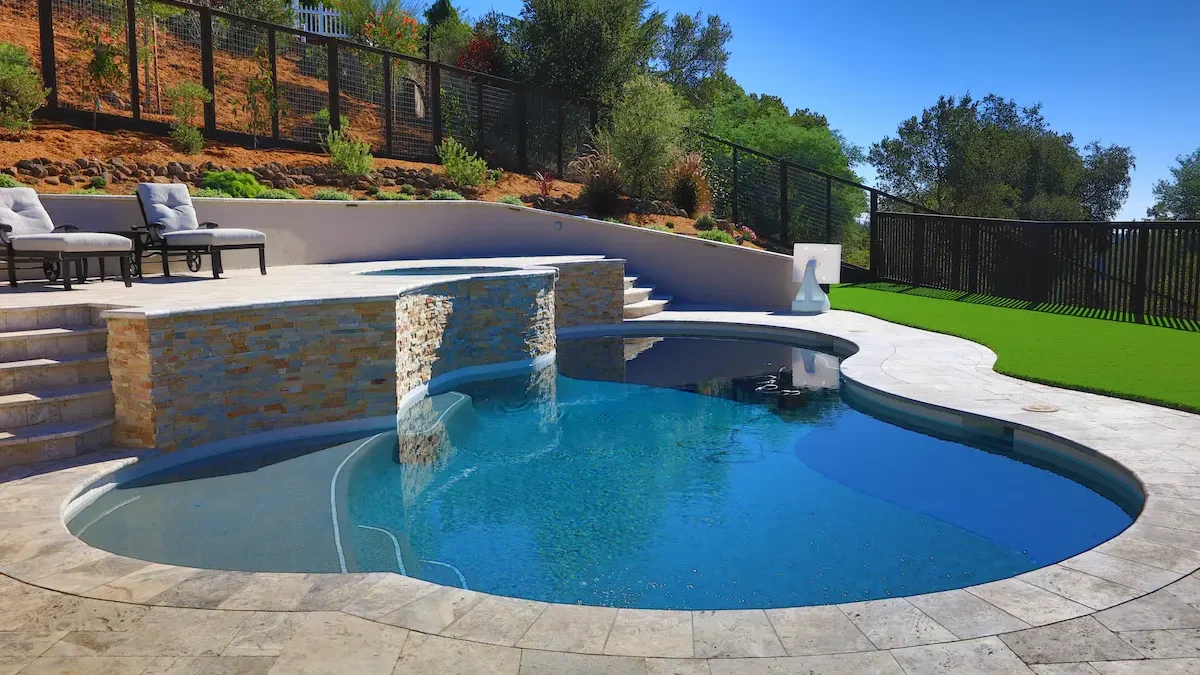

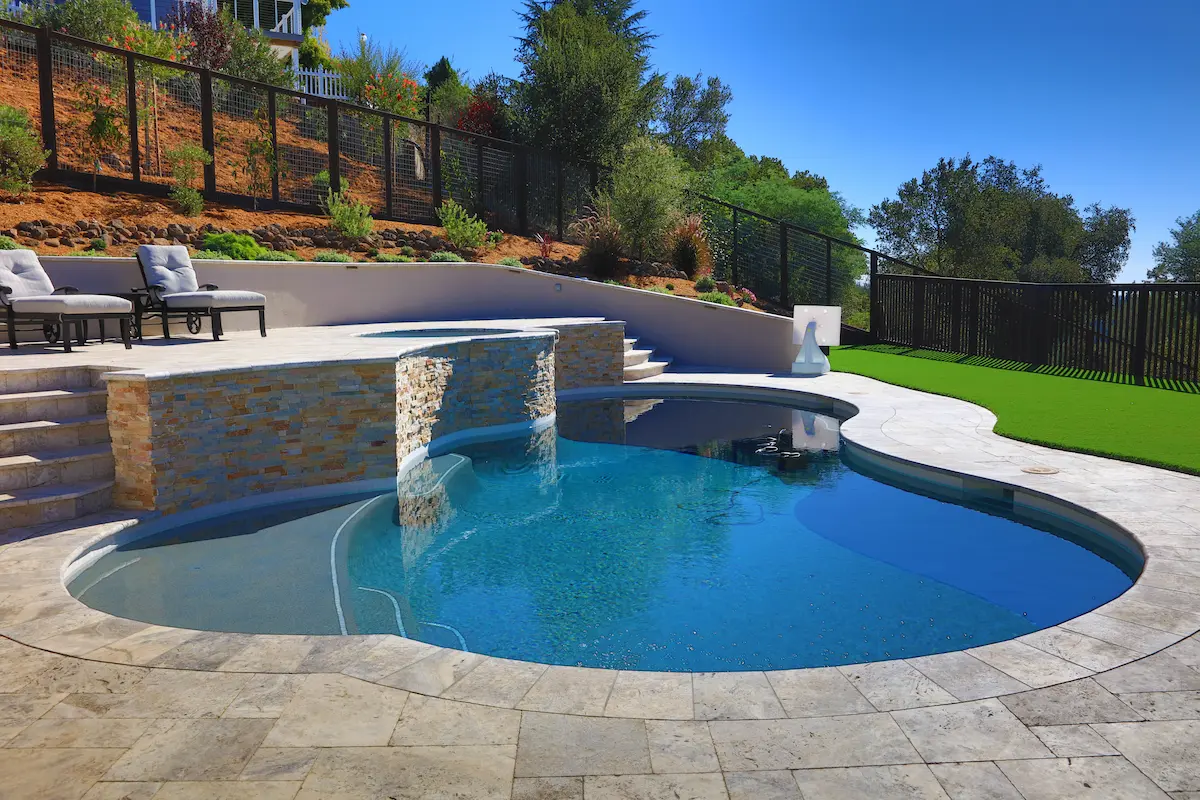
There’s a moment that happens for a lot of homeowners, usually sometime in early spring, where they look out at their backyard and think, that’s where the pool should go. Or maybe you had pool plans from right when you purchase your new home. It’s a good instinct. But turning that idea into an actual finished pool involves a lot more decision-making than most people expect going in.
Custom pools aren’t just bigger or fancier versions of the standard rectangle you might picture. They’re built around the specific shape of your yard, your budget, how you actually plan to use the space, and honestly your taste, which matters more than people give it credit for. If you’re thinking about going this route, here’s what’s worth knowing before you get too far into the process.
Custom Means Custom, Not Just Upgraded
A lot of people assume “custom pool” just means picking nicer tile or adding a waterfall to a standard design. It’s actually a completely different process from the ground up.
With custom pool installation, the shape, depth, entry points, and overall layout are designed specifically for your property instead of chosen from a catalog of preset molds. This matters more than it sounds like it would. A yard with an awkward slope, mature trees you don’t want to remove, or a weird property line can completely change what shape makes sense. A custom design works around those constraints instead of forcing your yard to accommodate a shape that was never designed with it in mind.
The Design Phase Takes Longer Than You’d Think
This is where a lot of first-time pool owners get impatient, understandably. You want the finished product, not weeks of meetings about drainage and sightlines.
But the design phase for custom pools is genuinely where most of the value gets built in. A good designer is thinking about how sunlight hits the yard throughout the day, where the loudest street noise is coming from, whether the pool should be visible from the kitchen window, and how the whole thing will look from inside the house in January when nobody’s swimming. Rushing this stage tends to be the single biggest regret people mention after the fact.
Budget for More Than the Hole in the Ground
The pool itself is usually just one piece of the total cost. Decking, fencing, landscaping around the new structure, lighting, and any water features you want all add up fast, and they’re easy to underestimate if you’re only picturing the water part.
Custom pool installation costs vary wildly depending on size, materials, site conditions, and how complicated the design gets, but a rough rule of thumb is to budget at least twenty to thirty percent beyond your initial pool quote for everything surrounding it. Some people skip this step and end up with a gorgeous pool sitting in the middle of an unfinished yard for another year while they save up for the rest.
Site Conditions Can Change Everything
Your soil type, how much your yard slopes, where utility lines run underground, and how close you are to your property line all affect what’s actually possible. Rocky soil might require blasting or extra excavation work. A steep slope might mean retaining walls become part of the project whether you originally wanted them or not.
This is honestly one of the more frustrating parts of the process for a lot of homeowners, because you can fall in love with a design during the planning phase and then find out mid-project that the site just won’t allow for it exactly as drawn. A good contractor will flag these issues early during site evaluation, before you’ve gotten emotionally attached to a specific plan.
Materials Shape the Whole Feel
Gunite, fiberglass, and vinyl liner pools all come with different tradeoffs in cost, durability, and how much they can actually be customized. Gunite tends to offer the most design flexibility since it’s essentially sprayed concrete shaped to whatever form you want, which is why it’s the most common choice for custom pools specifically.
Fiberglass is faster to install and lower maintenance, but you’re working within preset shell shapes, which limits how “custom” the final shape can really get. Vinyl liner pools sit somewhere in the middle. If a fully unique shape matters to you, gunite is usually where custom pool installation conversations end up landing.
Permits and Timelines Vary a Lot by Location
Some areas move through pool permitting in a few weeks. Others take months, especially if your property backs up to a wetland, sits near a property line easement, or falls under specific HOA design rules. It’s worth asking your contractor upfront what the realistic timeline looks like in your specific municipality rather than assuming national averages apply to you.
Weather adds another layer of unpredictability on top of that. A rainy season can push an installation back significantly, and most reputable builders will be upfront about this instead of promising a completion date they can’t actually control.
Think About How You’ll Actually Use It
This sounds obvious, but a lot of people design based on how they imagine using a pool instead of how they actually will. If you’re picturing lap swimming every morning, the shape and length matter a lot more than they would for a family that just wants somewhere for the kids to splash around on weekends.
Entertaining habits matter too. If you host often, a shallow lounging area or swim-up bar feature might be worth the added cost. If it’s mostly just your household using it, that same feature might end up being expensive dead space.
Maintenance Isn’t One Size Fits All Either
Different shapes, materials, and features come with different upkeep demands. An elaborate custom shape with lots of corners and steps can be trickier to clean than a simpler geometric design. Water features add mechanical components that need occasional servicing. It’s worth asking your builder directly what ongoing maintenance will realistically look like for your specific design, not just for custom pools in general, since the answer can vary a lot based on your choices.
Working With the Right Builder Makes or Breaks the Project
At the end of the day, a lot of what determines whether a custom pool project goes smoothly comes down to who you hire. Look for a builder with a strong portfolio of actual custom pools, not just standard installs with a few upgrades tacked on. Ask to see completed projects in person if possible, and talk to past clients about how communication went during the build, since that tends to be where projects either stay on track or fall apart.
Getting a custom pool is a genuinely exciting project, and for a lot of homeowners it becomes the centerpiece of how they use their backyard for decades. It just takes more planning than the finished photos ever suggest, and going in with realistic expectations about time, cost, and the design process tends to make the whole thing land a lot closer to what you originally pictured.
What To Know About Getting a Custom Pool
